
BPC-157Research-Grade Peptide · Lab-Verified Purity
BPC-157 is a research peptide derived from a small protein naturally found in stomach juice. It's one of the most-studied healing peptides on the market and is best known for helping tissues bounce back faster from wear-and-tear, injury, and inflammation. Because it's so stable it can be handled and stored more easily than most peptides its size.
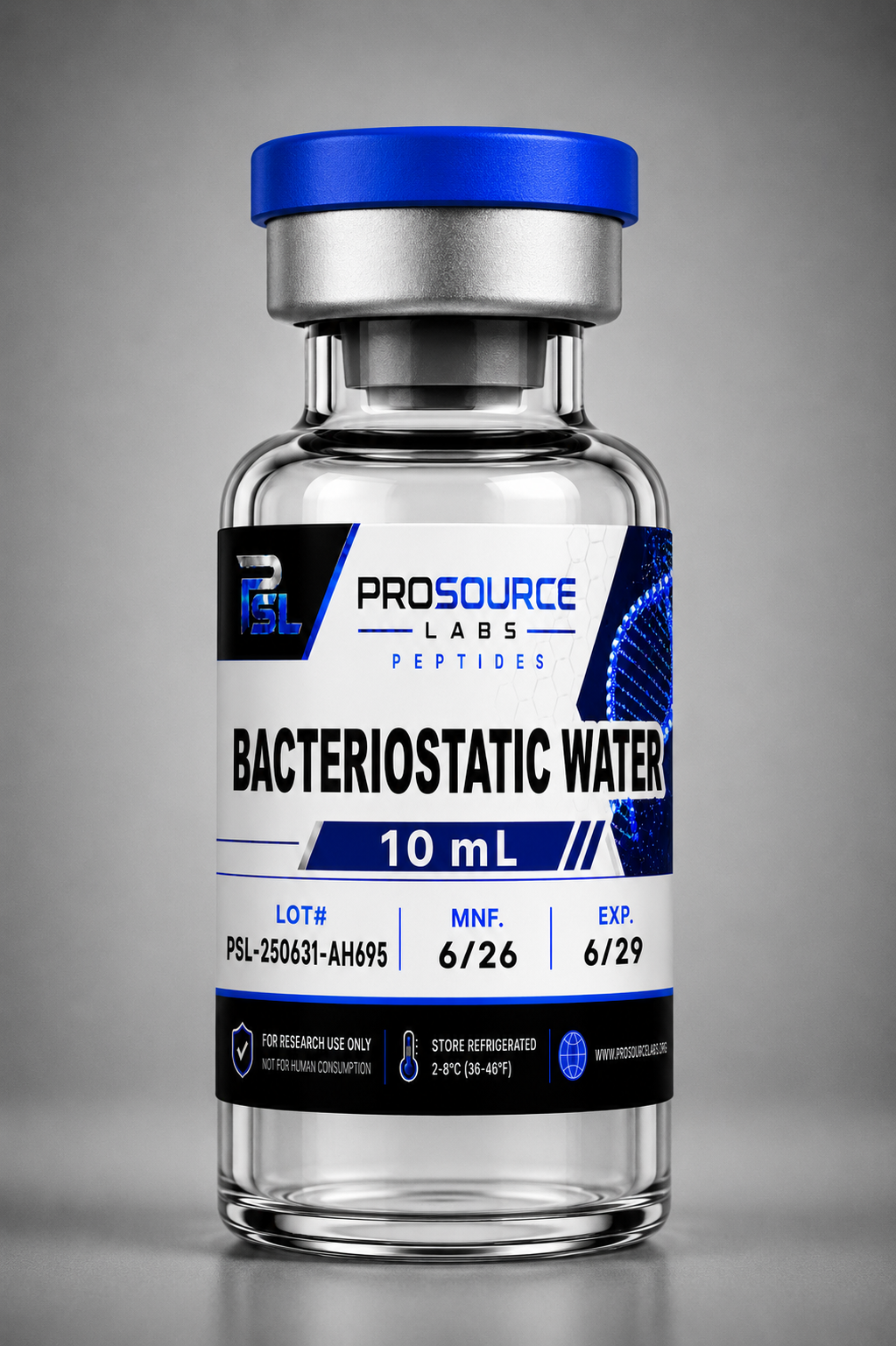
Everything researchers need to know about BPC-157
Manufacturing, testing, handling, and shipping details for BPC-157. For research purposes only — not for human or animal consumption.
BPC-157 — Product Overview
BPC-157 is a research peptide derived from a small protein naturally found in stomach juice. It's one of the most-studied healing peptides on the market and is best known for helping tissues bounce back faster from wear-and-tear, injury, and inflammation. Because it's so stable it can be handled and stored more easily than most peptides its size.
BPC-157 — Molecular Characteristics & Vial Specifications
ProSource Labs supplies BPC-157 in the following available vial sizes: 10mg. Each BPC-157 vial contains pure lyophilized peptide — no fillers, no bulking agents. Product SKU references: BPC157-10MV.
- Localized Healing: Targets tendons, ligaments, muscles, and joint tissues in study models
- Gut Support: Well-known for protecting and repairing stomach and intestinal lining in studies
- Blood Flow: Encourages new blood-vessel formation to bring oxygen and nutrients to injured spots
- Stability: Unusually stable for a peptide its size — resists rapid breakdown
Batches are characterized by ESI mass spectrometry to confirm molecular weight against the theoretical value, with amino-acid sequence confirmation on selected QA lots. Peptide content assay distinguishes net peptide mass from residual counter-ion salt.
BPC-157 — Laboratory Handling & Storage
Lyophilized BPC-157 vials should be stored at -20°C (or colder) in a laboratory freezer, inside the sealed factory container. Minimize warm-up cycles — move only the specific vial needed for a given experiment out of frozen storage at a time.
All laboratory handling of BPC-157 should follow the receiving institution's SOPs and applicable peer-reviewed protocols relevant to the researcher's specific experimental question. ProSource Labs does not publish end-user preparation or usage instructions.
BPC-157 — Third-Party Analytical Testing
Every batch of BPC-157 released by ProSource Labs undergoes independent reverse-phase High Performance Liquid Chromatography (HPLC) — the industry-standard analytical method for this class of research compound. Target chromatographic purity is typically ≥ 99%.
Additional characterization may include ESI mass spectrometry for molecular weight confirmation, Karl Fischer titration for residual moisture, and appearance/solubility inspection. A batch-specific Certificate of Analysis (COA) is available on request through customer support after purchase.
BPC-157 — Quality Assurance Process
Each production lot of BPC-157 is quarantined pending analytical release, tested against documented purity, identity, and moisture acceptance criteria, and only released to sellable inventory after passing every QA checkpoint. Batches that fail any single criterion are quarantined and never reach customer-facing inventory.
If a vial of BPC-157 you received from ProSource Labs ever fails your own institution's incoming QA testing, contact customer support at support@prosourcelabs.org — we retain samples of every batch for cross-verification.
BPC-157 — Typical Research Application
Widely used in research tissue-repair research — tendons, ligaments, muscle, and the gut lining are the most-studied targets. Researchers also pair BPC-157 with TB-500 in the well-known "Wolverine stack" for combined soft-tissue and systemic-repair studies.
BPC-157 — Packaging & Fast Southern California Shipping
BPC-157 vials ship in tamper-evident, moisture-resistant, cold-chain-friendly outer packaging from our Southern California distribution facility for fast US domestic delivery — typically 2-4 business days coast-to-coast, with expedited options available at checkout.
Every BPC-157 shipment is discreet — the outer packaging carries no product-specific branding or direct reference to the compound name inside, protecting researcher privacy. Tracking numbers are emailed automatically. For institutional or high-volume orders, dedicated wholesale pricing is available through the wholesale portal.
Our full FAQ covers ordering, wholesale, lab-verification, and customer support topics.
Explore related peptides


About BPC-157
What is BPC-157?
BPC-157 is a research peptide derived from a small protein naturally found in stomach juice. It's one of the most-studied healing peptides on the market and is best known for helping tissues bounce back faster from wear-and-tear, injury, and inflammation. Because it's so stable it can be handled and stored more easily than most peptides its size.
What is BPC-157 used for in research?
Widely used in research tissue-repair research — tendons, ligaments, muscle, and the gut lining are the most-studied targets. Researchers also pair BPC-157 with TB-500 in the well-known "Wolverine stack" for combined soft-tissue and systemic-repair studies.
How is BPC-157 verified?
Every BPC-157 vial ships with a batch identifier for full traceability back to its manufacturing lot, an HPLC purity report, and Certificate of Analysis (COA).
How should BPC-157 be stored?
Lyophilized BPC-157 is best stored refrigerated (2–8°C) or frozen (-20°C) for long-term stability. Once reconstituted, keep refrigerated and refer to peptide handling best practices.
Where does BPC-157 ship from?
All BPC-157 orders ship from ProSource Labs' Southern California facility with tracked domestic delivery.
Is BPC-157 intended for human use?
No. BPC-157 is supplied strictly for laboratory research applications and is not intended for and not approved for human or veterinary consumption.